If you’ve fallen in love with Pilates, there’s a good chance you’ve had the thought: could I actually teach this?
Maybe you’re looking for a career change, want to add Pilates to the work you already do, or simply feel drawn to understanding movement on a deeper level.
But once you start looking into Pilates Teacher Training in Australia, it can get confusing quickly. Mat or Reformer? How much training do you actually need? What qualification should you look for? And how do you know if a course will genuinely prepare you to teach?
As both a Pilates studio and teacher training provider on the Sunshine Coast, we’ve trained instructors and employed teachers on the other side of their qualification. Here’s what we believe is worth knowing before you choose your training.
Do you need a qualification to teach Pilates in Australia?
There isn’t one single government-issued Pilates qualification that every instructor in Australia must hold.
However, that doesn’t mean you should choose just any course.
Studios and insurers may have requirements around the training they recognise, professional insurance, first aid and scope of practice. Before enrolling, ask the provider exactly what qualification you’ll receive, what it allows you to teach and whether it meets the requirements of the studios or organisations you hope to work with.
Most importantly, don’t choose a course simply because it gives you a certificate quickly.
Your training should prepare you to confidently and safely teach real people.
Mat or Reformer Pilates Teacher Training?
This is one of the questions we’re asked most.
Mat Pilates Teacher Training develops a strong foundation in Pilates principles, anatomy, movement, programming and teaching without relying on large equipment.
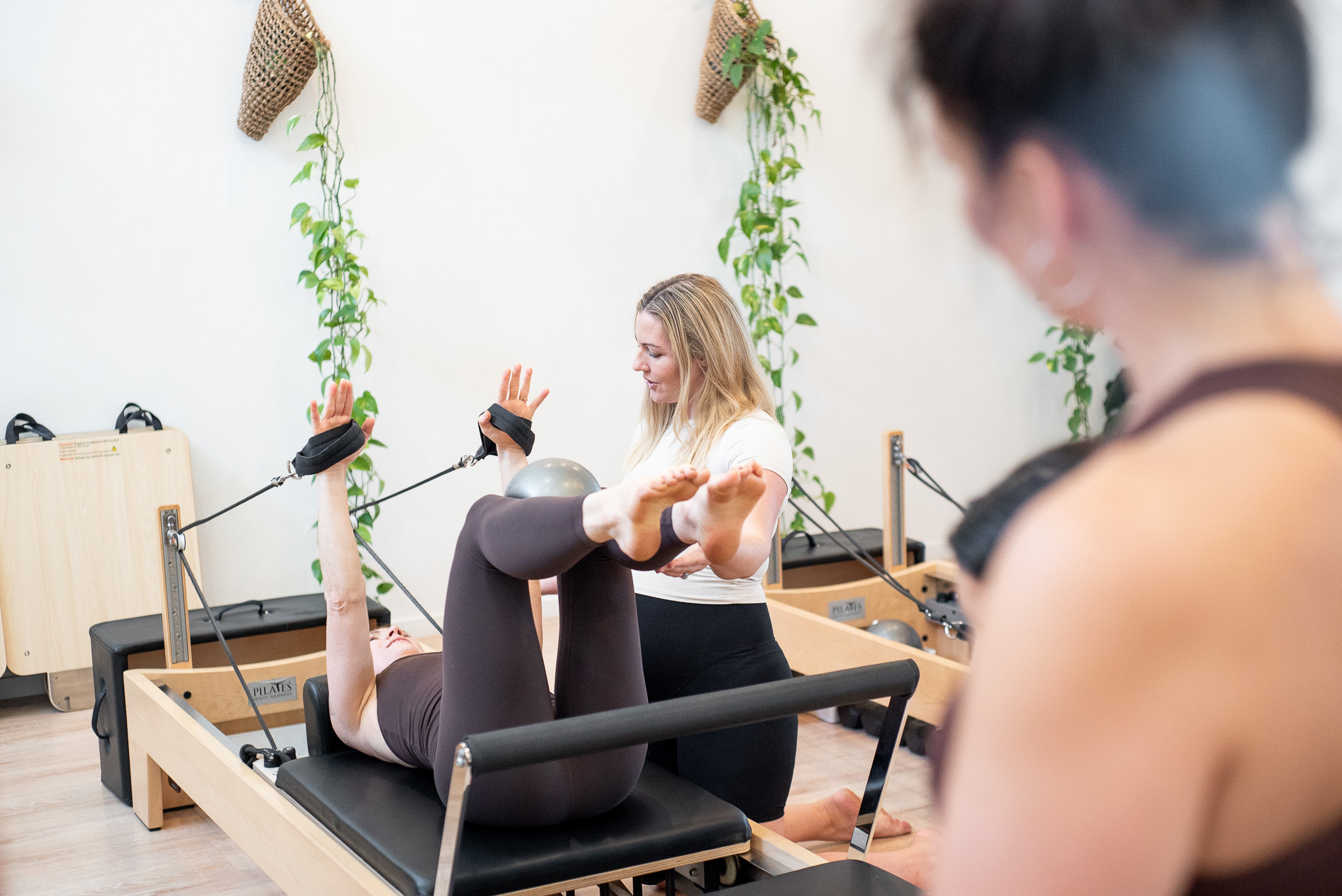
Reformer Pilates Teacher Training teaches you to work specifically with the Reformer, including spring resistance, equipment setup, exercise selection, programming, progressions and modifications.
Do you have to complete Mat before Reformer?
Not necessarily.
It depends on the training provider and where you ultimately want to teach. If your goal is specifically group Reformer Pilates, you may choose to begin there. Many instructors eventually complete both qualifications because it gives them greater versatility as teachers.
Do you have to be really good at Pilates first?
No — and we think this is important.
Being able to perform an advanced exercise doesn’t automatically make someone a great teacher.
Teaching requires a completely different skill set.
You need to be able to observe movement, communicate clearly, understand why you’re choosing an exercise and adapt what you’re teaching to the individual in front of you.
Some of the best instructors aren’t the people performing the fanciest exercises.
They’re the ones who make their clients feel safe, capable and seen.
What should good Pilates Teacher Training actually teach you?
This is where we’d encourage you to look beyond the exercise repertoire.
Knowing exercises is obviously important. But knowing why, when and for whom you might choose them is where teaching really begins.
A comprehensive Pilates Teacher Training should include:
- functional anatomy and movement principles
- Pilates repertoire and exercise intention
- programming and sequencing
- cueing and communication
- progressions, regressions and modifications
- working with different bodies and abilities
- practical teaching experience
- assessment and constructive feedback
- preparation for actually stepping onto a studio floor.
At Morning Light, one of the things we’re particularly passionate about is programming and critical thinking.
We don’t want a graduate walking into their first class relying on a memorised sequence and panicking the moment something needs to change.
We want them to understand the intention behind what they’re teaching and have the confidence to make decisions.
How important is practical teaching experience?
Very.
You can understand anatomy, know hundreds of exercises and write a beautiful program — and still feel completely different when ten people are suddenly looking at you waiting to be taught.
Teaching is a skill that needs to be practised.
You’ll probably muddle your words.
You’ll forget which side you’re on.
You’ll occasionally lose your place in a sequence you’ve practised twenty times.
That’s part of becoming a teacher.
Look for training that gives you genuine opportunities to practise teaching, receive feedback and build confidence before you’re expected to lead classes professionally.
Online vs in-person Pilates Teacher Training
Online learning can be incredibly useful, particularly for anatomy, theory and ongoing education.
For practical teacher training, however, we believe there is enormous value in learning in person.
Seeing different bodies move, practising cueing, learning equipment setup, asking questions in real time and receiving immediate feedback are difficult to replicate entirely online.
That’s why our own training combines education and theory with a strong emphasis on hands-on, face-to-face learning and practical teaching experience.
What do studios actually look for when hiring Pilates instructors?
This is something we can answer from experience because Morning Light doesn’t only train Pilates instructors we employ them too.
And a huge exercise repertoire isn’t necessarily what gets someone hired.
We’re looking for teachers who can connect with people.
Someone reliable, curious and receptive to feedback.
Someone who can look around a room and recognise when a client needs another option.
Someone who understands their scope of practice.
And someone who makes clients feel welcome rather than intimidated.
Technical knowledge is incredibly important, but great teaching isn’t about demonstrating how much the instructor knows.
It’s about the experience of the people they’re teaching.
Can you actually make a career out of Pilates?
Absolutely! but that career can look very different for different people.
Some instructors teach a handful of classes each week alongside another job. Others teach full time across multiple studios. Some move into private sessions, retreats, management, education or eventually open studios of their own.
We’ve watched Morning Light graduates go on to teach across multiple studios, build careers in movement and even open spaces of their own.
That’s one of our favourite parts of teacher training: seeing where people take it.
Your qualification isn’t the finish line. It’s the beginning of your development as a teacher.
How do you choose the right Pilates Teacher Training?
Before enrolling, talk to the training provider.
Ask who will actually be teaching you and what experience they have.
Look at the curriculum.
Ask how much practical teaching you’ll do.
Understand the qualification and accreditation.
Find out what happens after the face-to-face training finishes.
And look at what previous graduates are actually doing.
You should also pay attention to the environment you’re learning in.
Teacher training involves asking questions, getting things wrong, receiving feedback and stepping outside your comfort zone.
You want to learn somewhere you feel supported to develop your own voice as a teacher, rather than becoming a carbon copy of your educator.
Pilates Teacher Training on the Sunshine Coast
Morning Light offers comprehensive Mat and Reformer Pilates Teacher Training in Bokarina on the Sunshine Coast.
Our approach brings together functional anatomy, Pilates repertoire, movement principles, programming and sequencing, cueing, modifications and practical teaching experience within a working Pilates studio.
Our goal isn’t to produce instructors who can simply remember exercises.
We want to develop teachers who can think, observe, adapt and connect.
Because those are the skills you’ll keep using long after your teacher training finishes.
If you’re considering becoming a Pilates instructor, you can explore our upcoming Mat and Reformer Pilates Teacher Training courses, download our course guide or book a discovery call with our team.
We’d love to hear where you’re at and help you work out which pathway is right for you.