Last Updated: November 24, 2026
Quick Summary
Reformer Pilates vs mat Pilates comes down to your goals, budget and body rather than which method is better. Mat Pilates uses only your body weight and suits home practice and core control, while reformer Pilates uses adjustable springs for strength and targeted work.
- Mat Pilates needs only a mat and works well for home practice.
- Reformer springs can be adjusted to make the same exercise easier or harder.
- Reformer classes usually cost more per session and need studio access.
- Beginners should slow down and reduce range rather than forcing the full movement.
- Seek advice from a qualified health professional before starting if you have an injury or condition.
Table of Contents
- Reformer Pilates vs Mat Pilates at a Glance
- What Mat Pilates Is and How It Works
- What Reformer Pilates Is and How the Equipment Changes the Work
- Body Weight Versus Spring Resistance: Strength, Core and Flexibility
- Mat Pilates for Beginners and Reformer Pilates for Beginners
- How to Choose Between Reformer and Mat Pilates Based on Your Goals
- How Often to Do Pilates and Booking Your First Class at Morning Light Studio
- Frequently Asked Questions
Reformer Pilates vs Mat Pilates at a Glance
Choosing between reformer Pilates vs mat is less about which method is better and more about which one fits your body, budget and goals right now. Morning Light Studio in Bokarina teaches both styles, and the right choice depends on the person. Both styles build control, core strength and flexibility, but they do it in different ways. The table below gives a quick overview before we go deeper.
| Factor | Mat Pilates | Reformer Pilates |
|---|---|---|
| Equipment | Your body and a mat | Reformer machine with springs, carriage and footbar |
| Resistance | Body weight | Adjustable spring resistance |
| Setup | Minimal, can be done anywhere | Needs a studio with equipment |
| Typical class feel | Floor-based, flowing sequences | Machine-based, more varied movement |
| Best for | Home practice, core control, flexibility | Strength, targeted muscle work, rehab-style modifications |
Pros of mat Pilates: It is accessible, affordable to practise at home and easy to learn. It builds body awareness well.
Cons of mat Pilates: Progress can plateau once the body weight becomes easy. It offers less support for people with limited mobility.
Pros of reformer Pilates: The springs let you adjust resistance, so the same class works for beginners and experienced students. It supports people who cannot yet manage some floor movements.
Cons of reformer Pilates: It requires studio access and usually costs more per class. The equipment takes a little getting used to.
What Mat Pilates Is and How It Works
Mat Pilates is a floor-based practice that uses your own body weight as resistance. Movements are slow, controlled and focused on breath, alignment and the deep stabilising muscles of the core. A typical class moves through a sequence of exercises, often on a single mat, with the instructor cueing posture and control.
Because nothing but your body is doing the work, mat Pilates is a strong way to learn how to engage your muscles properly.
Watch out: beginners often rush the sequence to keep up with the class. Slowing down and reducing the range of a movement usually gives more benefit than forcing the full version.
What Reformer Pilates Is and How the Equipment Changes the Work
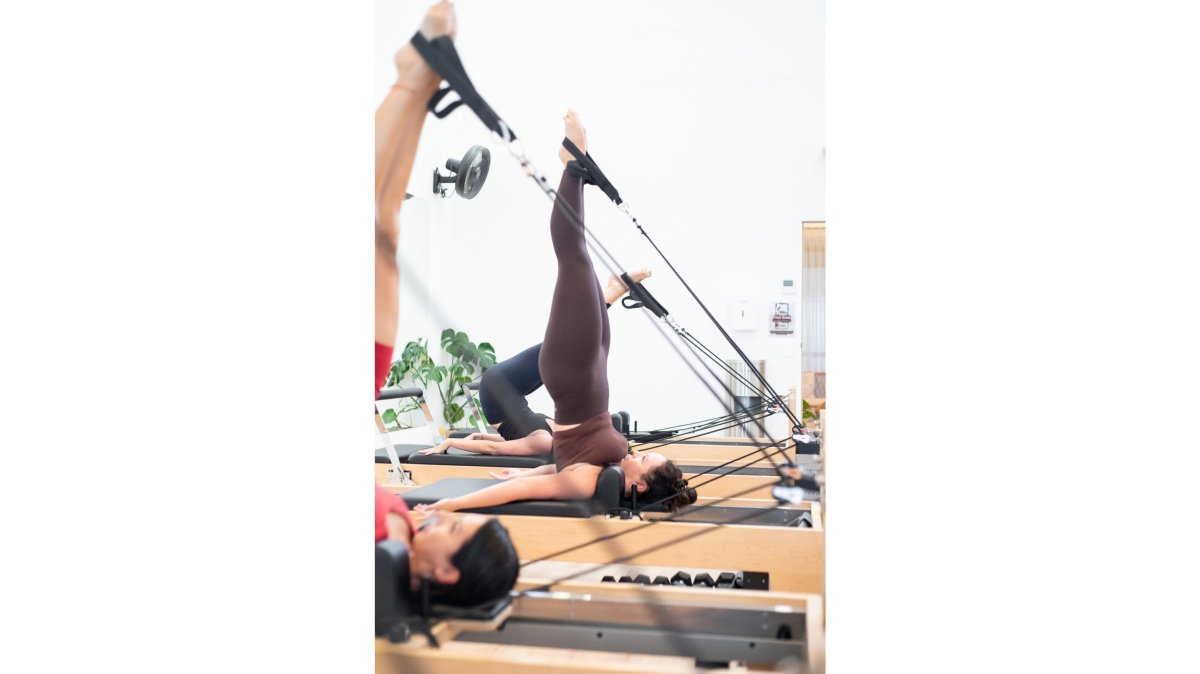
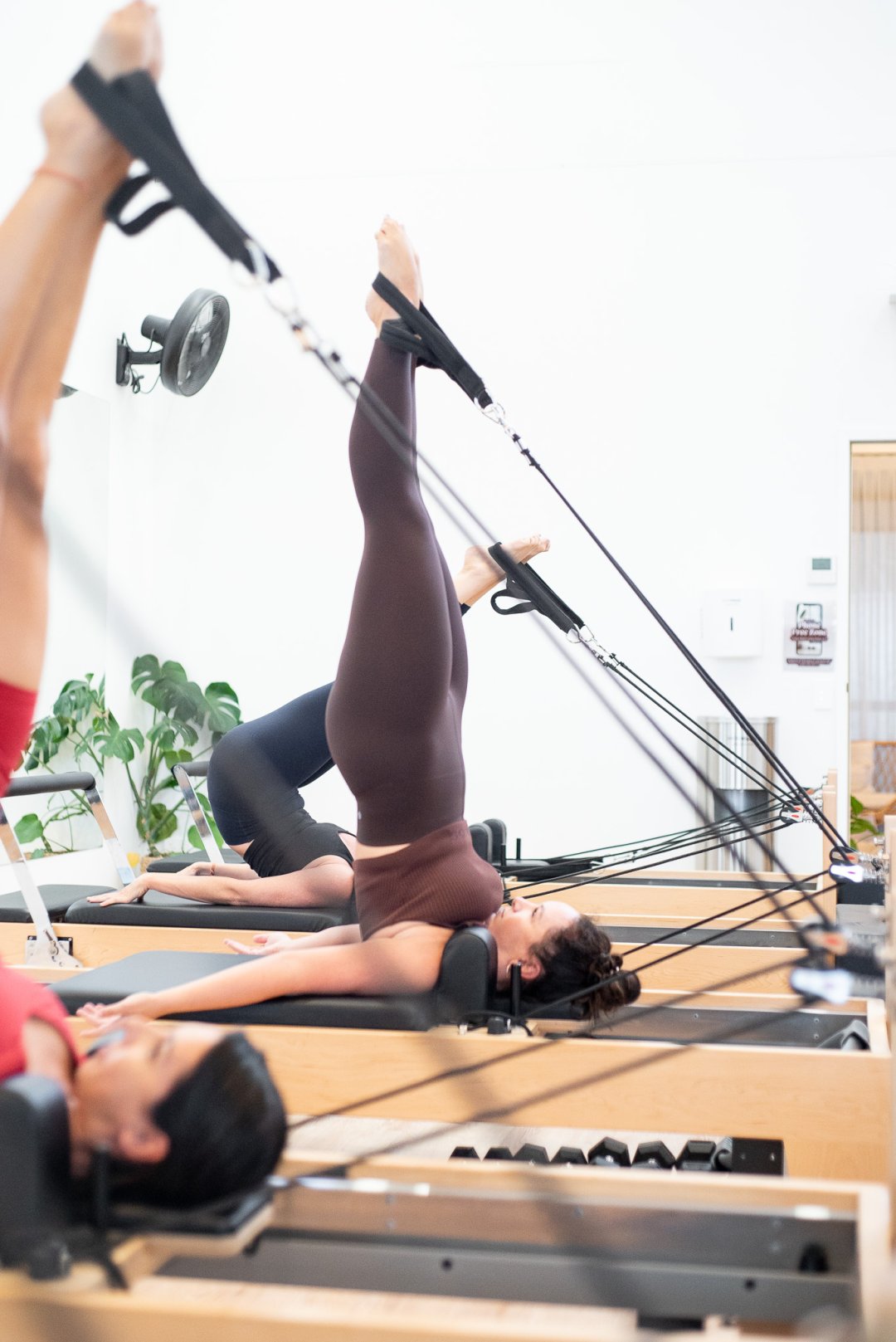
Reformer Pilates uses a machine called a reformer. It has a sliding carriage, a set of springs that provide resistance, a footbar and straps. The carriage moves along the frame, and you push or pull against the springs to perform each movement.
The springs change the work in a practical way. Heavier spring settings add resistance for stronger muscles. Lighter settings support people who are still building control. This means the same exercise can be made easier or harder without changing the position, which is why reformer classes suit many bodies.
The straps and footbar also let you support yourself in positions that may be difficult on the floor.
Body Weight Versus Spring Resistance: Strength, Core and Flexibility
The biggest difference between the two styles is how resistance is applied. Mat Pilates works against your body weight, which means the load changes as you move. Reformer Pilates adds a set resistance from the springs, which you can adjust.
For core strength, both approaches work the deep abdominal and back muscles. Mat Pilates demands strong control of the body in space, while reformer Pilates can isolate specific muscle groups more precisely.
For flexibility, mat Pilates often has the edge in the floor-based stretches and spinal articulation it includes. Reformer work can deepen stretches safely because the carriage supports the body. Both styles improve mobility over time, especially when practised consistently. Because the carriage can support deeper stretches while adding resistance, weighing the reformer Pilates benefits against your mobility goals can help clarify which style fits your practice.
Watch out: spring resistance can make a movement feel easier than it is. Keep your alignment and slow down, even when the springs feel light.
Mat Pilates for Beginners and Reformer Pilates for Beginners
Both styles suit beginners, but they ask different things of you in the first few weeks. Understanding those differences, and the safety questions that come with them, helps you start well rather than simply start.
What a beginner mat class involves
A beginner mat class introduces the basic principles: breath, neutral spine, core engagement and controlled movement. Most classes move through a sequence of floor exercises with the instructor cueing posture and control. The main challenge for new students is pacing, beginners often rush the sequence to keep up.
What a beginner reformer class involves
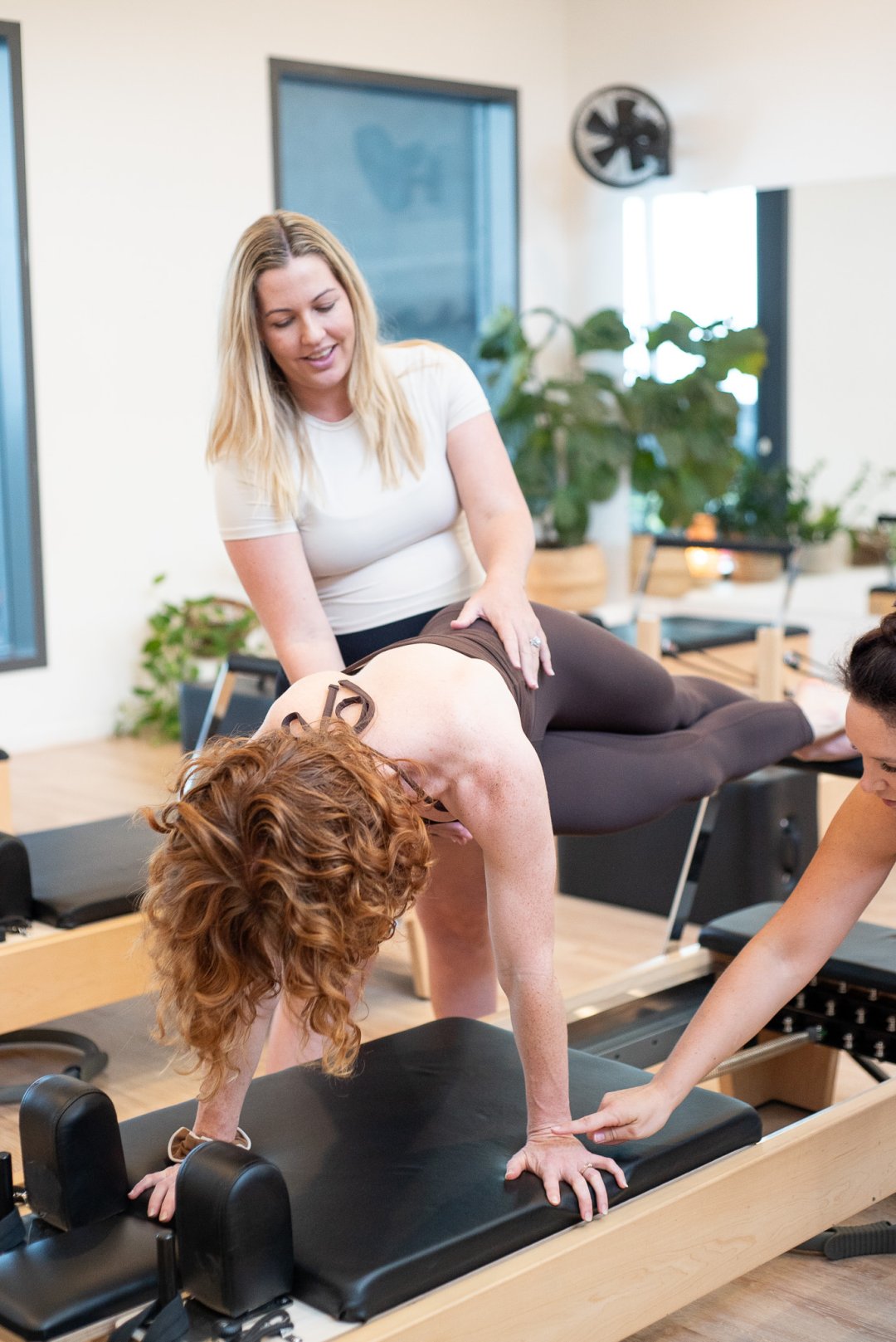
The reformer adds a sliding carriage, springs, a footbar and straps. A beginner-level class introduces the equipment slowly, with clear cues about how to set up, how to move the carriage and how to adjust spring tension.
Safety and contraindications
Equipment does not automatically make a class safer. A reformer can support you, but it can also load a movement in ways your body is not ready for if the springs are set too heavy or your alignment drifts. Likewise, mat work can be modified with props, a chair or a wall, but it still requires control.
Seek advice from a qualified health professional before starting either style if you:
- are recovering from an injury or surgery;
- are pregnant or postpartum;
- have a condition affecting your joints, balance, blood pressure or bone density;
- have experienced recent back, neck or shoulder pain.
Tell your instructor about any of these so they can offer modifications.
How to start well
- Begin with one class a week and build gradually.
- Choose a beginner-level class in the style you want to try, and arrive early to talk to the instructor about any concerns.
- Expect the movements to feel unfamiliar for several sessions. Both styles take regular practice before they feel natural.
- Track simple markers, how controlled a movement feels, how far you can move comfortably, and how consistent you are, rather than chasing specific results or timelines.
Neither style is a shortcut. The right starting point is the one that fits your body, your goals and your access to qualified instruction.
How to Choose Between Reformer and Mat Pilates Based on Your Goals
Most comparisons stop at “reformer for strength, mat for flexibility”. That is too blunt to be useful. A better approach is to match the style to your goal, your starting point, your body’s needs, your budget and how often you can realistically get to a studio.
1. What is your main goal?
- If your goal is building strength and muscular endurance, reformer Pilates gives you adjustable spring resistance that can be progressed as you get stronger. The same exercise can be loaded heavier or lighter without changing position, which makes progressive overload easier to manage.
- If your goal is core control, body awareness and spinal mobility, mat Pilates is a strong starting point. Working against body weight teaches you to feel and control your own alignment before adding external resistance.
- If your goal is general movement and consistency, either style works. The best choice is the one you will actually attend two to three times a week.
2. How much experience do you have?
Complete beginners usually do well with a beginner mat class first, because it introduces breath, neutral spine and core engagement, the principles that carry into every other form of Pilates.
3. Do you have mobility limits, an injury or a clinical condition?
This is where the choice matters most, and where broad claims about one style being “safer” are unhelpful. Reformer equipment can support people who cannot yet manage some floor movements, but equipment does not automatically make a class safer.
4. What is your budget and access?
5. How often can you train?
If you can only get to a studio once a week, mat work at home between sessions keeps your practice consistent. If you prefer structured, supervised sessions and can commit to a regular studio schedule, reformer classes may suit you better.
A simple recommendation framework
- Goal: strength and targeted muscle work → reformer, with mat work as a supplement.
- Goal: core control, flexibility and body awareness → mat, with reformer as an occasional challenge.
- Goal: rehab-style support or modified movement → reformer with a qualified instructor, after clinical advice.
- Goal: low-cost, flexible practice → mat at home, plus occasional studio classes.
- Goal: teaching → mat training builds the foundation, while reformer training prepares you for machine-based teaching. Our Certified Mat Pilates Teacher Training Sunshine Coast course suits people who want to teach mat work, with and our Certified Reformer Pilates Teacher Training Sunshine Coast course is designed for machine-based teaching.
Many people end up doing both, and that is a reasonable long-term plan: mat work builds the foundation, and reformer work adds targeted strength and variety. There is no rule that says you must pick one for life.
If you are interested in reformer work for core strength, our guide to Reformer Pilates Classes for Core Strength: A Practical Guide explains what to expect from machine-based core training.
How Often to Do Pilates and Booking Your First Class at Morning Light Studio
For most people, two to three sessions a week is a practical starting point. This gives your body time to adapt between classes while keeping the habit consistent. Beginners may prefer to begin with one or two sessions and increase gradually. are a useful reference for overall exercise targets, and you can check them at Australian Government physical activity guidelines.
If you want to try both styles, book a beginner class in each. You can also get a feel for the space itself on our Our Space page.
When you are ready, book your first class and try both styles to see which one suits you. Our teachers are happy to help you choose a starting point.
Frequently Asked Questions
What is the difference between reformer Pilates and mat Pilates?
Mat Pilates is done on a padded mat using only your body weight and sometimes small props such as rings or bands. Reformer Pilates uses a sliding carriage, springs and straps, so the springs supply resistance and assist movement. Both build core strength, control and flexibility, but the reformer offers adjustable resistance that can make exercises easier or harder without changing the move itself. Mat classes suit people who want an accessible, low-cost option they can also practise at home, while reformer classes suit people who want more guided resistance and support.
Is reformer Pilates harder than mat Pilates?
Not necessarily. Difficulty depends on the exercise, the spring setting and your current fitness rather than the equipment alone. Reformer springs can lighten a movement for a beginner or add challenge for someone stronger, which is why many newcomers find the reformer approachable. Mat Pilates can feel demanding because you carry your full body weight through every exercise, especially in core and balance work. A good instructor at either style will modify the class to match your level.
Is reformer or mat Pilates better for beginners?
Either can suit a beginner. Many beginners start with mat Pilates because it teaches foundational movement patterns and breathing with minimal equipment. Others prefer reformer classes because the springs and straps provide support and feedback, which can help with alignment. Morning Light Studio teachers adapt exercises for all levels, so the best choice is often the style that fits your schedule and comfort. Check current class options and pricing directly with the studio before booking.
How often should you do Pilates to see results?
Many people notice changes in strength, posture and body awareness after a few weeks of consistent practice. Practising two or three times a week is a common approach that allows time for recovery while building skill. Mixing reformer and mat classes can add variety and balance. Consistency matters more than intensity, so choose a frequency you can maintain over months. If you have an injury, are recovering after pregnancy or have a health condition, speak with your doctor or physiotherapist before increasing your training.