Last Updated: November 10, 2026
Quick Summary
To modify Pilates exercises postnatally, first confirm you have been cleared to exercise, then regress each movement by reducing its range, lying down, or using support. Watch the midline for doming or coning and progress only when movements stay controlled. Here is how to modify Pilates exercises postnatally safely.
- Get clearance from your GP, midwife or obstetrician before changing any exercise.
- Watch for pressure, heaviness or leaking when you cough, sneeze or lift.
- Start with pelvic tilts, heel slides, supported bridges and seated breathing.
- Stop a movement if the midline domes, ridges or bulges, or the back arches.
- Change only one variable at a time and hold each new load for at least two weeks.
Table of Contents
- Check Your Readiness Before You Modify Anything
- Postnatal Pilates Exercises for Beginners and How to Regress Them
- Adapting Exercises for Diastasis Recti
- Returning to Reformer Pilates After Birth and Planning Your Workout Duration
- Frequently Asked Questions
Many new mums in Australia want to return to Pilates without setting back their recovery. This guide shows how to modify Pilates exercises postnatally.
Check Your Readiness Before You Modify Anything
Check your readiness before changing any exercise, since every birth and recovery differs.
Ask yourself these questions:
- Has your GP, midwife or obstetrician cleared you for exercise?
- Do you feel pressure, heaviness or leaking when you cough, sneeze or lift?
- Does your lower back or pelvis ache during everyday tasks?
- Can you breathe calmly while you move?
If any answer worries you, speak with a health professional. A physiotherapist can assess your core and pelvic floor first.
Watch out: Jumping into full-length exercises without a readiness check is the most common mistake. Start small.
Postnatal Pilates Exercises for Beginners and How to Regress Them
Start with simple, supported movements. Make any exercise easier by reducing its range, lying down instead of standing, or using a pillow or ball. You can also join a mums and bubs Pilates class to practise these movements with support.
- Pelvic tilts: Lie on your back with knees bent. Gently tilt your pelvis and hold for three breaths.
- Heel slides: Slide one heel out and back, keeping your belly gentle.
- Supported bridges: Lift your hips only as high as feels comfortable.
- Seated breathing: Breathe in to expand your ribs, then breathe out and lightly engage your pelvic floor.
Exhale on effort and keep each movement small and controlled.
Adapting Exercises for Diastasis Recti
Diastasis recti is a widening of the rectus abdominis gap. Some separation after birth is normal; what matters is whether the midline stays firm under load.
Use the table below to adapt common Pilates exercises, watching the midline during each movement.
| Original exercise | Safer regression | Signs to stop | When to progress |
|---|---|---|---|
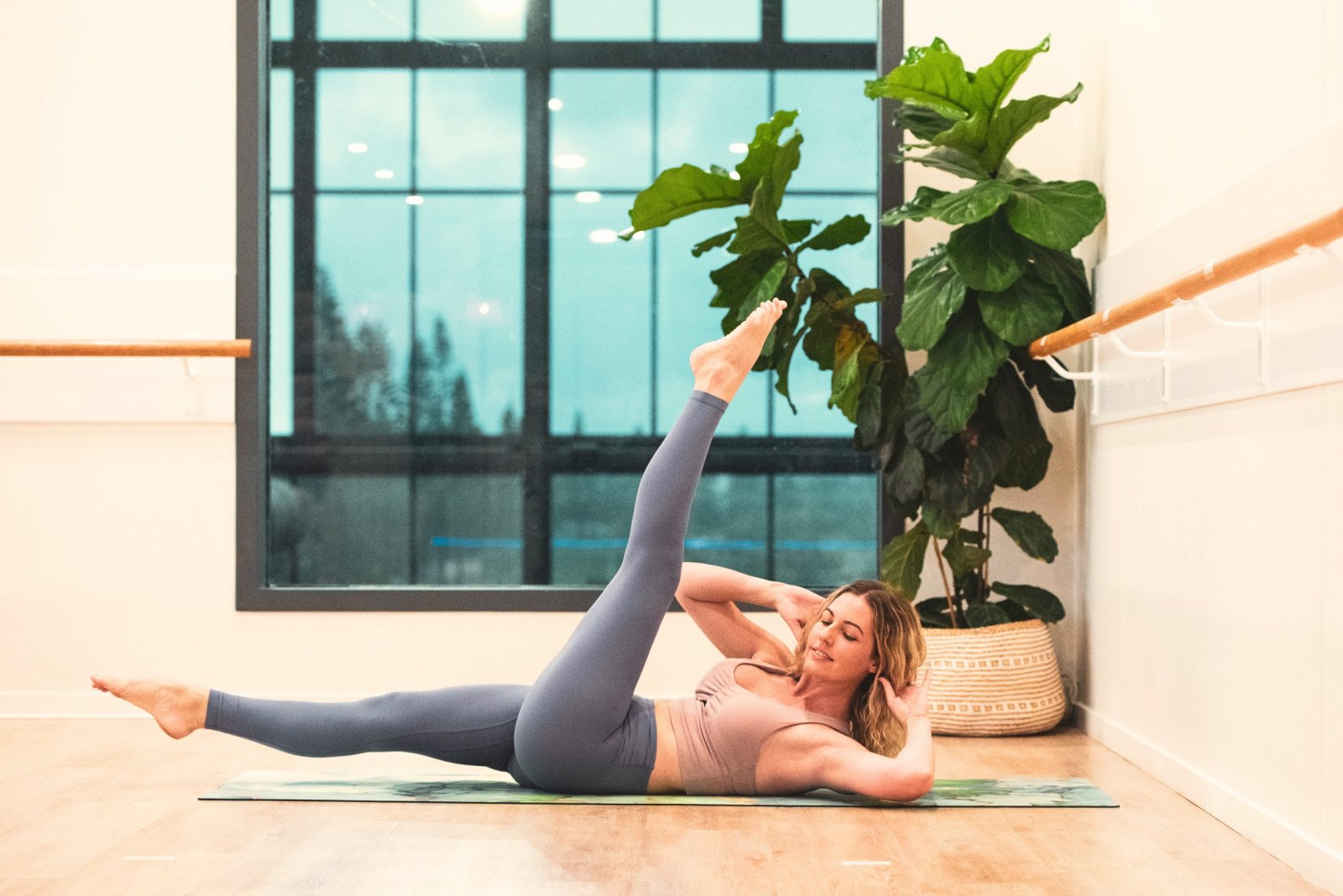
| Full sit-up or roll-up | Supported pelvic tilt with a small head lift, or heel slides | Doming or ridging down the midline, or pulling at the rib edges | When the midline stays flat through a full set without effort at the neck |
| Single-leg stretch | Heel slides with one leg, keeping both hands on the belly | Belly bulging as the leg moves, or lower back arching | When you can move the legs without any visible change along the midline |
| Plank | Modified plank on the knees, or wall plank | Coning, pelvic heaviness, or breath holding | When a modified plank is held with steady breathing for the full set |
| Hundred | Seated breathing with gentle arm movement and the head supported | Increased pressure in the pelvis or a widening gap | When the head can be lifted without midline change through the whole exercise |
A simple self-check. Lie on your back with knees bent and place your fingers just above the navel. Lift your head about a finger-width. If the tissue softens and separates or the belly bulges, reduce the movement.
Stop and reassess if you notice: coning or doming along the midline, abdominal or lower back pain, pelvic heaviness or leaking, or pressure that doesn’t settle within minutes of rest.
A narrowing gap is positive, but width alone does not set your program. A physiotherapist can help you choose regressions and know when to progress.
Returning to Reformer Pilates After Birth and Planning Your Workout Duration
Reformer Pilates adds springs, straps and a moving carriage, so the load changes with every movement.
Stage 1: Mat-based foundation (typically the first several weeks). Continue the supported movements above. Progress only when you can complete the set with steady breathing, no midline doming, and no leaking or pelvic heaviness. When you’re ready, book a reformer Pilates class that suits your pace.
Stage 2: Light reformer work with the lowest spring tension. Choose neutral footwork and short-range leg work that keeps the carriage stable. Keep sessions to 20 to 30 minutes and avoid sustained abdominal load. Move on only when you can repeat the session without next-day pelvic fatigue or back pain. Once the carriage work feels steady without lingering symptoms, build on that control with gradual core strengthening through GET FIT BLOG POSTS.
Change only one variable at a time, holding each new load for at least two weeks. If symptoms return, drop back for a week.
Stage 4: Full-length classes. Return to standard group classes when you can control the carriage through the full range of each movement, keep your breathing and pelvic floor coordinated throughout, and report no symptoms the following day.
Many women jump from Stage 2 to a full class because the equipment feels familiar. Reassess your core and pelvic floor first.
After a caesarean, a tear or a pelvic floor concern, allow more time at each stage and seek individual advice before increasing load.
Frequently Asked Questions
When can I start Pilates after giving birth?
Most women can begin gentle postnatal Pilates once their midwife or GP has checked their recovery, which often falls somewhere between the six-week postnatal check and later, depending on how they gave birth and how they feel. Start with breathing, pelvic floor coordination and short, low-load movements, and build up gradually. If you had a caesarean, a longer recovery window is common. Stop and seek advice if you notice heaviness, leaking, bulging or pain. A pelvic health physiotherapist can give you an individual assessment before you return to classes.
Should I see a pelvic health physiotherapist before returning to Pilates?
A pelvic health physiotherapist is a useful step before returning to Pilates, particularly if you had a long labour, an instrumental birth, a caesarean, or any ongoing symptoms such as leaking urine, pelvic heaviness or pain. They can assess your pelvic floor, check for abdominal separation and tell you which exercises to modify or avoid. Bring this assessment to your Pilates instructor so they can adapt the sequence for you. Many women find that a single assessment gives them clear, personal criteria for progressing.
How long should a postnatal Pilates workout be?
Early postnatal sessions are best kept short, often 15 to 20 minutes of gentle work, with one or two rest breaks. As your energy, core control and symptoms improve over several weeks, you can extend sessions toward 30 to 45 minutes. Keep the intensity conversational and stop if your breathing becomes strained or you notice pelvic discomfort. Adding sessions gradually matters more than reaching a set length. Morning Light Studio’s instructors can help you choose a class length and intensity that suits your recovery stage.