Quick Summary
Reformer Pilates builds core strength by asking your deep abdominal and back muscles to stabilise your trunk while a carriage moves against spring resistance. Two or three sessions a week, with a steady progression, is how most people see results.
- Reformer exercises engage deep core muscles such as the transverse abdominis, pelvic floor and multifidus before the limbs move.
- Footwork, plank on the carriage, knee stretches, teaser and leg circles cover most of what a reformer class trains.
- Most people build core strength with two or three sessions a week, spaced across the week to allow recovery.
- Progress through four stages, moving on only when you can complete the current one with steady breath and control.
- Stop any exercise causing sharp pain, dizziness or pelvic pressure, and seek guidance if you are pregnant or recovering from surgery.
Table of Contents
- How Reformer Pilates Builds Core Strength
- Reformer Pilates Core Exercises to Know
- Reformer Pilates for Beginners: What to Expect in Your First Class
- How to Choose a Reformer Pilates Class for Your Goals
- Reformer Pilates for Back Strength and Posture
- How Often to Do Reformer Pilates for Core Results
- Progression, Safety and When to Seek Professional Guidance
- Booking Your First Reformer Class at Morning Light Studio
- Frequently Asked Questions
How Reformer Pilates Builds Core Strength
Reformer Pilates builds core strength by asking your deep abdominal and back muscles to stabilise your trunk while the carriage moves against spring resistance. Morning Light Studio in Bokarina runs reformer classes alongside yoga, mat Pilates and barre, so you can build core control in a setting designed for every level.
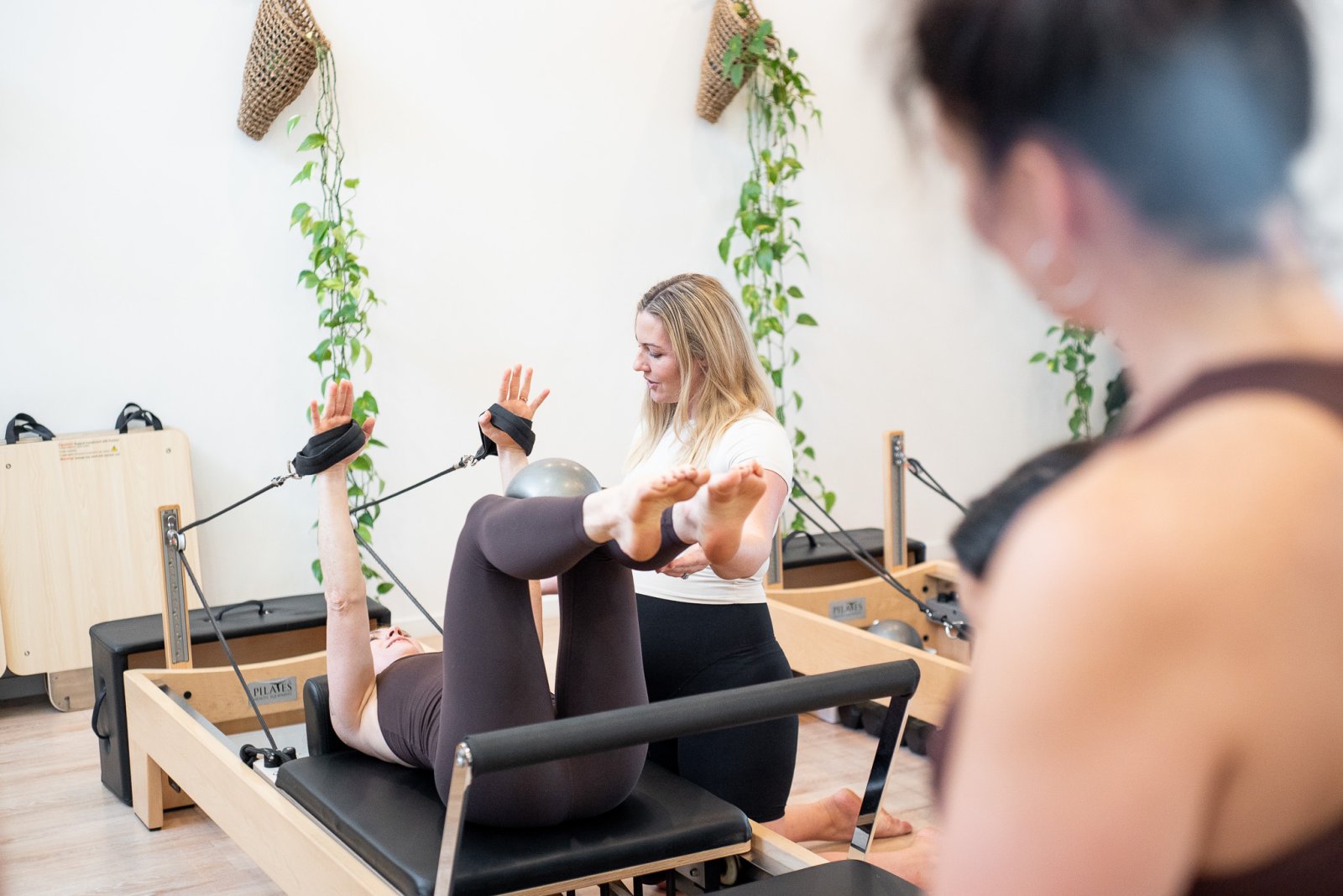
Core strength is more than a flat stomach. It is the ability of your trunk to hold your pelvis and spine steady while your arms and legs move (Abdominal muscles).
Deep core muscles and trunk stability
The deep core includes the transverse abdominis, the pelvic floor and the multifidus along the spine. These muscles work below conscious control during everyday movement, which is why many people feel weak in them even when they can do a hundred crunches. Reformer exercises ask these muscles to engage before the limbs move, which trains the timing as well as the strength.
Why spring resistance changes core work
The springs on a reformer add resistance that changes with every position of the carriage. Pushing the carriage away from the footbar loads the core differently from pulling it back, so one machine can challenge stability, control and endurance. Adjusting spring settings is one of the main ways instructors scale a class up or down.
Reformer Pilates Core Exercises to Know
A small set of movements covers most of what a reformer class trains. Learn these first and the rest of the class will make more sense. For each one, the setup, the breathing and the spring setting matter as much as the movement itself.
- Footwork: Lie on your back with your heels on the footbar, feet hip-width apart and parallel. Inhale to press the carriage out until your legs are almost straight, then exhale to draw it back slowly, keeping your pelvis neutral and your ribs down. Use a medium spring so the carriage returns without you having to haul it. Watch out: letting the lower back arch as the legs extend means the deep core has switched off, shorten the range until you can keep the pelvis still.
- Plank on the carriage: Place your hands on the shoulder blocks and your knees or feet on the carriage, then press out to a straight line from head to heels. Breathe steadily and hold for three to five slow breaths before drawing the carriage back in. A lighter spring makes the hold harder to control; a heavier spring makes it more stable. Watch out: hips sagging or piking means the trunk has lost control, reduce the hold time rather than pushing through.
- Knee stretches: Kneel on the carriage with your hands on the footbar, spine rounded. Exhale as you press the carriage away, inhale as you draw it back, keeping the curve of the spine constant. This challenges abdominal control under load and teaches you to move the carriage with your centre rather than your arms.
- Teaser: Lie back with your legs in the air, then exhale to roll your torso and legs up into a V shape while the carriage moves, and inhale to lower with control. It demands full-body control and is usually introduced only after you can hold a stable plank and footwork with a still pelvis. Use a light-to-medium spring so the movement stays smooth.
- Leg circles: Lie on your back with one leg in a strap and the other steady on the footbar. Circle the strapped leg slowly while the pelvis stays level, which checks hip and pelvic stability. Keep the circles small at first and breathe throughout.
Start with the slowest, most controlled version of each movement. Speed is what usually breaks form. A common pattern is that the breath goes first, if you notice yourself holding it, reduce the range or the spring load until you can breathe through the whole repetition.
Reformer Pilates for Beginners: What to Expect in Your First Class
Your first reformer class is about learning how the machine responds to your body. You will not be asked to keep up with experienced members.
Morning Light Studio’s classes welcome people who are new to Pilates. You can tell your instructor if something feels wrong at any point.
How to Choose a Reformer Pilates Class for Your Goals
The right class depends on what you want from your training and how much experience you have. A beginner who wants to build foundational control needs a different class from someone returning after a break or recovering from an injury.
Ask yourself three questions before booking:
- Are you new to Pilates, or returning after time away?
- Do you want to focus on core strength, mobility or general conditioning?
- Do you have any injury, pregnancy or postnatal considerations that need an instructor’s guidance?
If you have a health condition, speak with your doctor or physiotherapist before starting. Morning Light Studio’s teachers are skilled and welcome discussing your needs.
Reformer Pilates for Back Strength and Posture
Reformer work supports back strength by training the muscles that hold your spine upright. Back extensors, the deep stabilisers along the spine and the abdominal wall all work together, and reformer exercises ask them to coordinate under changing load.
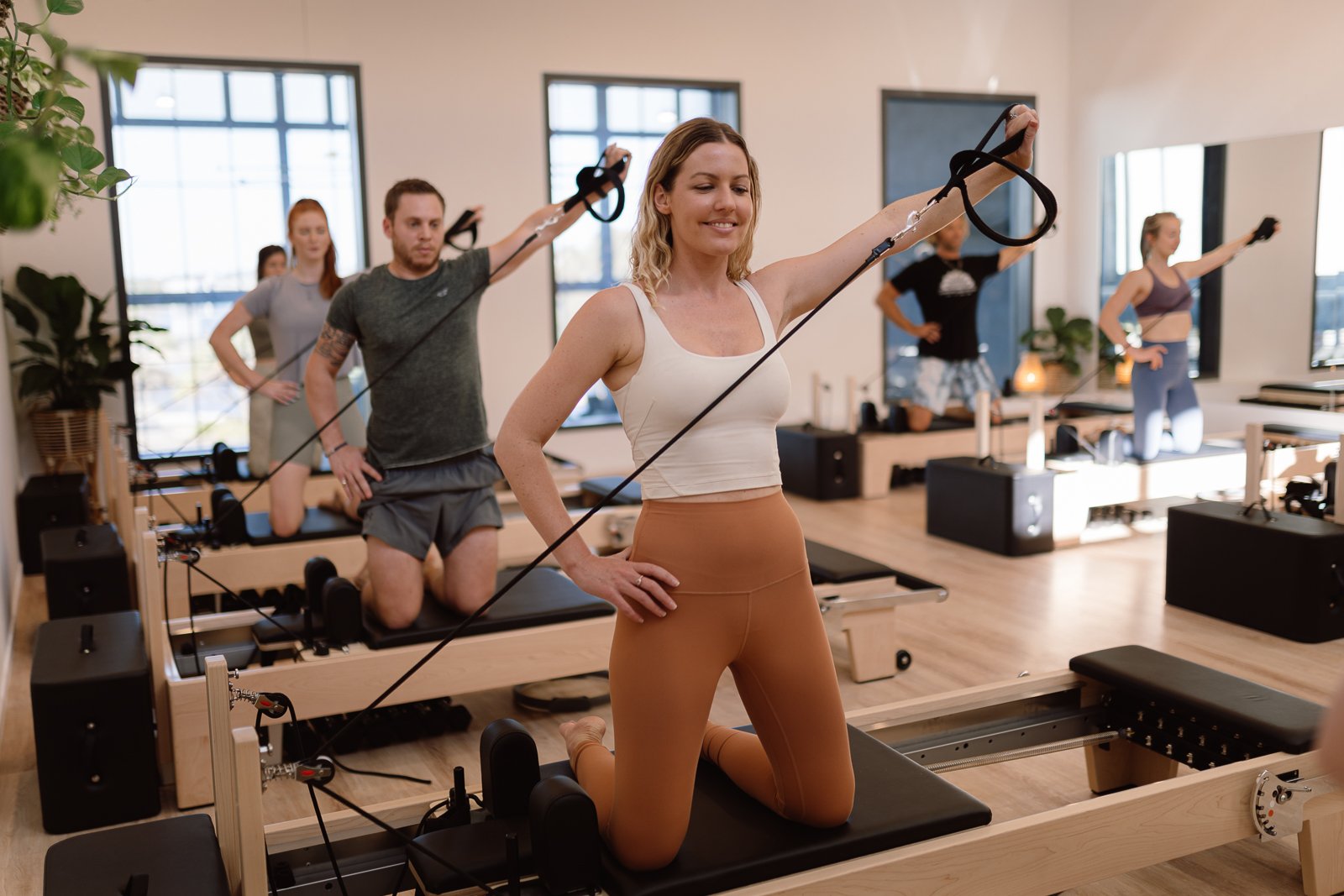
Good posture depends on that coordination. A strong core lets you sit and stand with less effort, which many people notice after a few weeks of regular practice. Focus on keeping your ribs over your hips and your neck long during each exercise.
Progress slowly. Sudden or forceful movement can strain the back, so prioritise control over range.
How Often to Do Reformer Pilates for Core Results
Most people build core strength with two or three sessions a week, spaced across the week to allow recovery. Consistency matters more than intensity, so a steady routine usually beats occasional hard sessions. Establishing this sustainable rhythm provides the necessary foundation for those who need to rebuild strength after a prolonged period of physical dormancy.
Many beginners start with one or two classes a week while their body adapts. As control improves, you can add sessions or increase spring resistance. Pay attention to fatigue, soreness that lasts more than a couple of days, or any pain, and ease back if these appear.
Track how you feel rather than chasing a fixed number. Improvements in posture, balance and everyday movement are often the first signs of progress.
Progression, Safety and When to Seek Professional Guidance
Progress in reformer Pilates comes from gradually increasing challenge while keeping form correct. Move to harder variations only when you can complete the current one with steady breath and control. A staged plan makes that easier to judge than a vague sense of improvement.
A four-stage progression you can follow
- Weeks 1-4, Learn the setup. Focus on footwork, knee stretches and a supported plank. Aim for one or two classes a week. The milestone is being able to complete footwork with a still pelvis and steady breathing for the whole set.
- Weeks 5-8, Add control under load. Introduce leg circles and longer plank holds. The milestone is holding a plank for five slow breaths without the hips dropping, and keeping the pelvis level through leg circles on each side.
- Weeks 9-12, Build endurance and range. Increase spring resistance on footwork and add teaser preparations. The milestone is completing a full class without losing breath control or form in the final exercises.
- Beyond 12 weeks, Refine and vary. Add harder variations, change spring settings and mix in mobility work. The milestone is being able to adjust your own spring settings and recognise when a movement is too advanced for that day.
Track progress by how you feel and move rather than by a fixed number. Improvements in posture, balance and everyday movement, climbing stairs, carrying shopping, sitting at a desk, are often the first signs. Many practitioners find that two or three sessions a week, spaced across the week, is enough to see change over a couple of months, but progress varies with starting fitness, consistency and sleep.
Safety and when to seek professional guidance
Stop an exercise if you feel sharp pain, dizziness or pressure in the pelvis, and tell your instructor. Seek professional guidance before starting if you are pregnant, postnatal, recovering from surgery or managing a spinal condition. A physiotherapist or doctor can advise on what is appropriate for your body, and an instructor can then adapt the class around that advice.
Common mistakes include holding the breath, letting the lower back arch during plank work and rushing the carriage. Slow down and check your alignment in a mirror or with your instructor’s feedback. Watch out: if a movement causes pain that persists after class, that is a signal to reduce the load and get it checked rather than to push through the next session.
The article lays out a four-stage progression with a milestone for each stage, which can be scanned at a glance.
| Stage | Timing | Milestone |
|---|---|---|
| Learn the setup | Weeks 1-4 | Footwork with still pelvis and steady breathing |
| Add control under load | Weeks 5-8 | Five slow breaths in plank without hips dropping |
| Build endurance and range | Weeks 9-12 | Full class without losing breath control or form |
| Refine and vary | Beyond 12 weeks | Adjust own spring settings and recognise too-advanced moves |
Booking Your First Reformer Class at Morning Light Studio
Morning Light Studio in Bokarina offers reformer Pilates alongside yoga, mat Pilates and barre, in an air-conditioned, light-filled space. The studio is designed for all levels, and teachers adapt classes to individual needs.
To get started, look at the reformer Pilates class schedule and what each session involves on our website. Our step-by-step guide to booking reformer classes in 2026 walks you through the process. When you are ready, check current class prices and passes before you commit. New to Pilates? Our beginner guide to starting Pilates without the guesswork covers what to prepare. If you are weighing cost against your goals, read whether reformer Pilates is worth the investment.
Book your first class and find out how reformer work feels for your body. Morning Light Studio’s community and teachers are ready to help you build core strength at your own pace.
Frequently Asked Questions
Can reformer Pilates help build core strength?
Yes. Reformer Pilates trains the deep core, including the transverse abdominis, pelvic floor and back muscles, through controlled movements against spring resistance. Because the carriage moves under you, the core has to stabilise the trunk on every repetition rather than relying on momentum. Most people notice better trunk control and posture within several weeks of consistent practice, though the rate of progress depends on how often you train, your starting fitness and any postnatal or injury considerations. A qualified instructor can adjust springs and exercises to suit your level.
What exercises in a reformer Pilates class target the core?
Common core-focused exercises include the footwork and knee lifts, the plank and plank leg lifts, the teaser, the pike, and the criss-cross. Each one asks the abdominals to hold the pelvis and ribcage steady while the limbs move. Leg circles and the hip dips add rotational and lateral control. Instructors often change the spring setting so the exercise is challenging but still allows good form. Ask your teacher to show modifications if you are new or recovering from a condition.
Is reformer Pilates suitable for beginners who want to strengthen their core?
Yes, reformer Pilates is well suited to beginners because the springs provide assistance and the movements can be scaled up or down. Beginners usually start with lighter spring settings, simple footwork and supported plank variations. Tell the instructor about any previous injuries, pregnancy or surgery before class.
How often should you do reformer Pilates for core strength?
Many people train two to three times per week, which allows time for the muscles to recover between sessions while building consistency. Starting with two sessions is reasonable for beginners, particularly if you are returning to exercise after a break or postnatal recovery. Frequency should be guided by how your body responds, your schedule and your overall health. If you have a medical condition, check with your doctor or physiotherapist before increasing your training load.
How long does it take to notice improvements in core strength?
Many people report better posture, steadier movement and less back fatigue within four to six weeks of regular classes. Measurable strength gains typically take longer and depend on attendance, progression to harder spring settings and how closely you follow form cues. Keeping a simple log of which exercises you can do, the spring settings you use and how you feel afterwards can help you see progress that is easy to miss day to day.
What should you expect in a reformer Pilates class?
Most classes start with a brief warm-up and breathing, followed by footwork and core exercises on the reformer, and finish with stretching. Expect to adjust the springs, use the straps and footbar, and move slowly with control rather than speed. Classes at Morning Light Studio are designed for all levels, and instructors will offer modifications.
Is reformer Pilates good for back strength and stability?
Reformer Pilates can support back strength and stability because it trains the muscles that hold the spine in alignment, including the deep back extensors and the abdominals. Exercises that emphasise neutral spine and controlled movement help improve posture. However, if you have a back condition, a recent injury or pain that radiates into the legs, speak with a physiotherapist or doctor before starting, and choose classes where an instructor can monitor your form closely.