Last Updated: November 14, 2026
Quick Summary
To start Pilates as a beginner, you need only a mat, comfortable clothing and a small patch of floor, then learn five foundational exercises: pelvic curl, dead bug, bird dog, clamshell and chest lift. Aim for two to three twenty-minute sessions a week, moving slowly and prioritising control over intensity.
- Every Pilates class rests on six principles, including centring, control, precision, flow, breath and concentration.
- Choose a non-slip mat around 6mm to 10mm thick; thinner yoga mats feel hard under the spine.
- Do each foundational exercise for one set of five to eight slow repetitions.
- Beginners often feel ready to progress after roughly eight to twelve weeks of consistent practice.
- Soreness lasting more than three days means you did too much, too soon.
Table of Contents
- What to Know Before You Start Pilates
- Mat Pilates for Beginners: What You Need and Where to Set Up
- Beginner Pilates Exercises to Learn First
- How Often Should Beginners Do Pilates?
- Book Your First Class at Morning Light Studio
- Frequently Asked Questions
What to Know Before You Start Pilates
Learning how to start Pilates as a beginner comes down to one reassuring fact: you do not need to be fit, flexible or coordinated to begin.
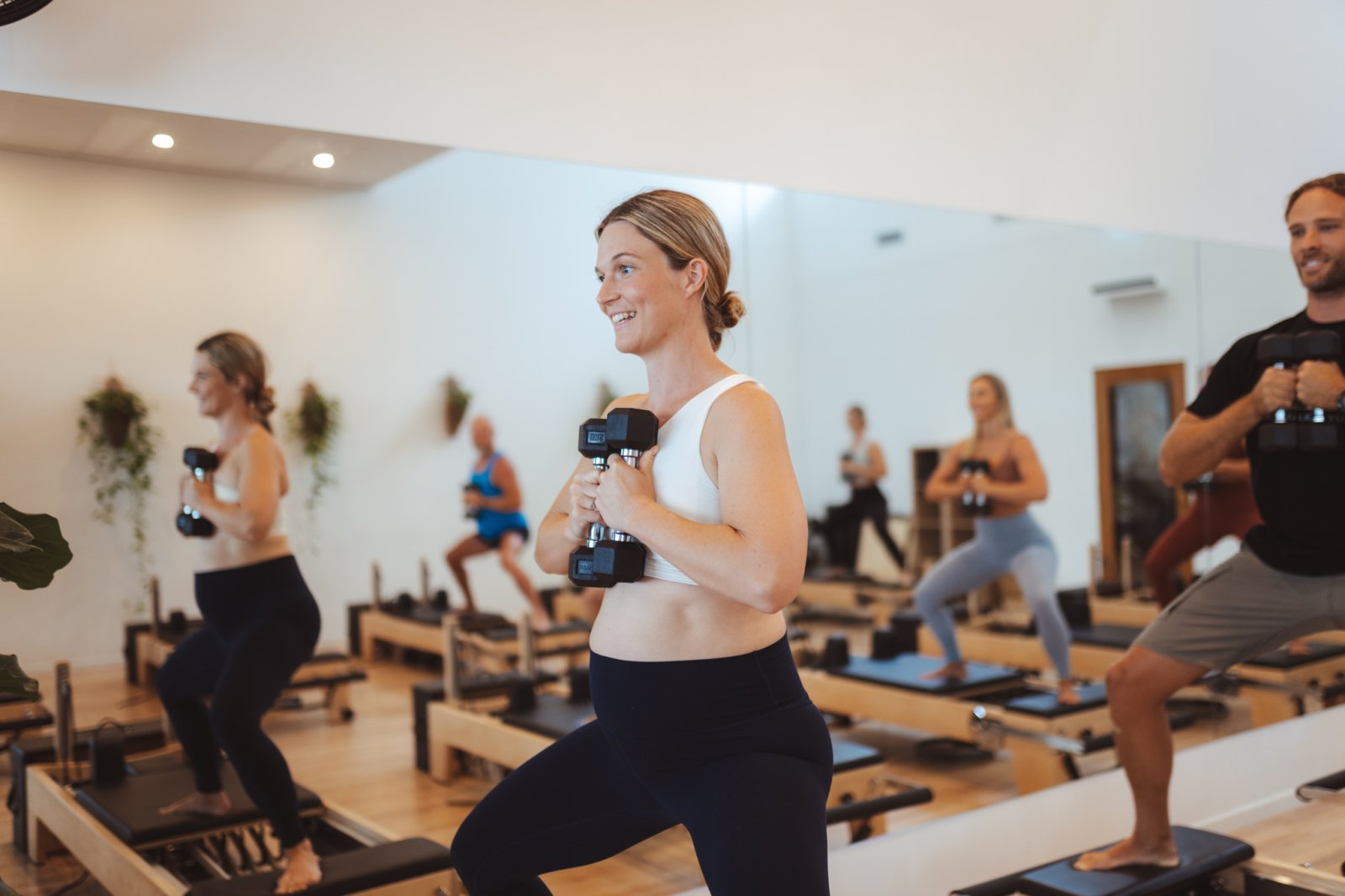
Pilates is a low-impact method of controlled movement that builds core strength, posture and body awareness through slow, precise exercises matched to your breath.
Below, we break down exactly how to start Pilates as a beginner, from the principles behind every class to your first routine.
The Six Principles That Shape Every Class
Every Pilates session rests on six ideas, and knowing them makes your first class far less confusing:
- Centring brings focus to your core, the powerhouse of the body.
- Control means every movement is deliberate, never rushed.
- Precision asks you to place each limb with care.
Do You Need to Be Flexible to Begin?
No. Flexibility is a result of Pilates, not a requirement for it. A common mistake is waiting until you feel “ready”, which never happens.
Beginners often arrive with tight hamstrings and stiff shoulders, exactly the starting point the method was designed for. Your range of motion grows with repetition, not before it.
If you want the full picture of what Pilates actually is before your first session, our guide on what Pilates is and why you should practice covers the fundamentals in plain language, and our studio FAQ answers the practical questions first-timers ask most.
Mat Pilates for Beginners: What You Need and Where to Set Up
Mat Pilates for beginners needs very little: a mat, comfortable clothing and a small patch of floor. No machines, no shoes, no gym membership. The barrier to starting is psychological, not logistical.
Here is what we suggest you gather:
- A non-slip mat around 6mm to 10mm thick. Thinner yoga mats (3mm to 5mm) feel hard under the spine during rolling exercises; thicker mats (12mm and above) make balance work wobbly. A mid-weight mat is the sweet spot.
- Fitted clothing you can move and breathe in. Loose tops fall over your face during chest lifts and dead bugs, so a fitted top and leggings or shorts work best.
- A water bottle and a towel.
Mat versus reformer: which should a beginner choose?
A mat is the right starting point for almost every beginner: it is cheap, portable and teaches you to control your own bodyweight, the foundation of the method. A reformer adds spring resistance and support, but requires a studio or a significant home purchase. Learn the mat fundamentals first, then try a reformer class, the exercises transfer directly.
Setting up at home in a small space
You need roughly two metres by one metre of clear floor, about the length of a single bed. In a small apartment, that space usually exists, it is just occupied. A few ways to claim it:
- Roll the mat out parallel to a wall rather than across the middle of the room, so you only need to clear one side.
- Store the mat rolled in a corner or behind a door; a mat bag keeps it out of the way.
- Use a hallway or the strip of floor beside the bed if the living room is shared. Two metres of hallway is enough for every exercise in a beginner routine.
Good light helps you check your alignment. A phone propped up to record one set can teach you more about your posture than any mirror, because you can watch it back slowly.
Watch out: practising on carpet without a mat lets your feet slide and throws off your alignment, and a thick rug can roll under your hips during pelvic curls.
Beginner Pilates Exercises to Learn First
Start with five foundational beginner Pilates exercises. Each one teaches a principle you will use in every class that follows.
- Pelvic curl. Lie on your back, knees bent, and slowly roll your spine up and down one vertebra at a time. This builds articulation and warms the lower back.
- Dead bug. On your back, extend opposite arm and leg while keeping a neutral spine. This trains abdominal engagement and stability.
- Bird dog. On hands and knees, reach one arm and the opposite leg long. This develops scapular stabilisation and balance.
- Clamshell. Lying on your side, open the top knee against a light resistance band. This targets the glutes and supports the pelvic floor.
- Chest lift. A small, controlled curl of the upper spine with hands behind the head. This strengthens the abdominals without straining the neck.
}]}” style=”margin:2rem 0; padding:20px 20px 10px; border:1px solid #e5e7eb; border-radius:12px; background-color:#ffffff;”>
Time
Move slowly. If you cannot control the movement, reduce the range rather than adding speed.
The biggest mistake beginners make is chasing a burn. Mastering these foundational movements requires a consistent approach to form, which is why consulting a beginner mat Pilates guide helps ensure your practice remains focused on precision rather than intensity.
How Often Should Beginners Do Pilates?
Beginners often aim for two to three Pilates sessions a week. This gives your muscles time to recover while building muscle endurance and body awareness steadily.
Start with two. Add a third once the movements feel familiar and you are not sore for days afterwards.
Consistency matters more than intensity. Three short sessions beat one long one, because proprioception and alignment improve through frequent repetition.
A weekly plan might look like this:
- Two mat sessions at home, twenty minutes each
- One studio class for feedback on your form
- One rest or walking day between sessions
If you are fitting classes around work, our studio timetable shows the full weekly schedule so you can plan sessions that suit your routine.
A simple progression path from beginner to intermediate
Most beginners want to know when they are “ready” to move on. Rather than a fixed timeline, use milestones. People often feel ready to progress after roughly eight to twelve weeks of consistent practice, but the markers matter more than the calendar:
- Weeks 1 to 4: two sessions a week, focusing on the five foundational exercises and breath coordination. The goal is to finish each session feeling lengthened, not exhausted.
- Weeks 5 to 8: add a third session and begin linking exercises without a full rest between them. You should be able to hold a neutral spine during dead bug and bird dog without your lower back arching.
- Weeks 9 to 12: introduce load or complexity, a resistance band on clamshells, longer holds, or a reformer class. You are ready for intermediate work when you can complete a full beginner routine with controlled form and no neck or lower-back strain.
A simple way to track this is a notebook or phone note with three columns: date, exercises completed, and one thing that felt easier than last time. That single sentence is a better progress marker than how sore you feel.
Managing soreness after your first sessions
Beginners often quit not because Pilates is too hard but because they did not expect the soreness. Pilates can produce delayed onset muscle soreness (DOMS), which often peaks 24 to 48 hours after a session.
A few practical habits help:
- Keep the first two weeks genuinely easy. Soreness lasting more than three days means you did too much, too soon.
- Walk on rest days. Gentle movement increases blood flow and reduces stiffness more effectively than complete stillness.
- Do not stretch aggressively into sore muscles. Gentle mobility work is fine; forcing range on a sore lower back is not.
Watch out: sharp pain during an exercise is different from muscular soreness afterwards. If a movement produces joint pain, pinching or numbness, stop and get it checked rather than pushing through, Pilates should never hurt a joint.
Book Your First Class at Morning Light Studio
The fastest way to learn how to start Pilates as a beginner is to have a teacher watch you move.
At Morning Light Studio in Bokarina, our inclusive community and skilled teachers welcome complete beginners every week.
You can view our Pilates classes and book your first session whenever you are ready. Newcomers can also claim an intro pass for unlimited classes over 28 days to try different styles before committing to a routine.
Come as you are.
Starting Pilates alone is possible, but starting with guidance is faster and safer. A teacher spots the small alignment errors you cannot feel, and a supportive room makes showing up easier.
Frequently Asked Questions
How should a beginner start Pilates?
Begin with a small number of foundational moves rather than a full class. Learn neutral spine, lateral breathing and abdominal engagement first, then add exercises such as pelvic curls and bird dogs. Practise two sessions a week for 15 to 20 minutes before extending them. A beginner-friendly studio class is the fastest way to learn correct alignment, because a teacher can correct your form before habits set in. Start pilates at a pace that leaves you feeling worked but not wrecked.
Is mat Pilates or reformer Pilates better for beginners?
Mat Pilates for beginners is the usual starting point because it builds body awareness using only your own body weight, and it is easy to repeat at home. Reformer Pilates adds spring resistance and support, which some people find easier on the joints and useful for targeting specific muscles. Many beginners do a few mat sessions first, then try a reformer class once they understand the breathing and core cues. Both work well; the best choice is the one you will attend consistently.
How many times a week should a beginner do Pilates?
Two sessions a week is a sensible starting point for most beginners. That gives your muscles time to recover between sessions while still building the habit and the mind-body connection. Once two weekly sessions feel comfortable, add a third. Beginners often notice better posture and less stiffness within a few weeks, with visible strength changes typically taking longer. If you are sore for more than a day or two, reduce the intensity or the number of sessions.
What should I wear to my first Pilates class?
Wear fitted, stretchy clothing you can move and breathe in, such as leggings and a close-fitting top. Loose shirts can ride up during inverted exercises, and baggy pants make it hard for a teacher to check your alignment. Most studios, including Morning Light Studio, are air-conditioned, so bring a light layer for the cool-down. You can practise barefoot or in grip socks. Bring a water bottle and, if you have one, your own mat.